

SOC 2 Type I vs Type II: Choosing the Right Security Framework for Your Business
If you’ve been searching for answers like “Do I need SOC 2 Type 1 or Type 2?” you’re not alone. It’s one of the most common questions we hear from businesses approaching SOC 2 for the first time.
Whether you’re a fast-growing SaaS startup, a fintech navigating investor due diligence, or a healthcare platform managing sensitive data, understanding the difference between Type I and Type II can save you significant time, money, and frustration.
In this blog, Cyber Forte will break down the key differences between SOC 2 Type 1 and Type 2, what your clients are likely expecting, and how to decide which option makes the most sense for your current stage.
What is the difference between SOC 2 Type 1 and Type 2?
Both SOC 2 Type I and Type II are based on the Trust Services Criteria (Security, Availability, Confidentiality, Processing Integrity, and Privacy). The difference lies in what is audited and for how long.
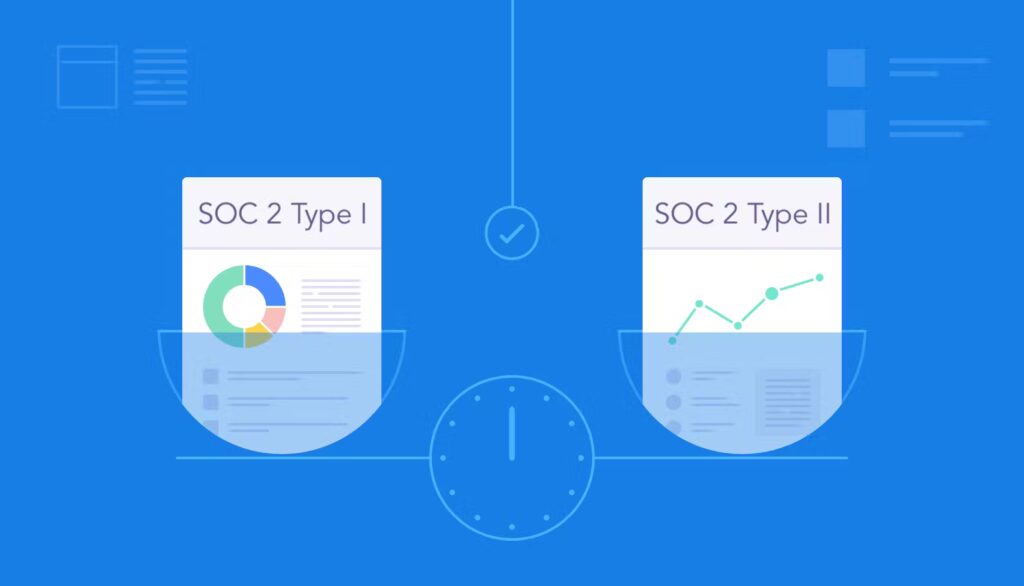
- SOC 2 Type I is a snapshot. It checks whether your security controls are properly designed at a specific point in time. For example, do you have the right access controls, encryption, backup, and vendor management policies in place? It validates design, not ongoing practice.
- SOC 2 Type II is more like a time-lapse. It evaluates whether your controls actually work consistently over a period (usually 3, 6, or 12 months). Auditors review logs, incident response evidence, user offboarding, code approvals, and more.
In short:
- Type I says: “Our controls are designed properly.”
- Type II says: “Our controls are designed — and they work, reliably, over time.”
Pro tip: When a prospective customer asks for your SOC 2 report, they usually mean Type II unless they specify otherwise.
How long does a SOC 2 Type 1 vs Type 2 audit take?
- Type I: Quicker — often completed in 4 to 6 weeks if controls are documented and ready.
- Type II: Longer — because your controls need to operate effectively over several months before the audit even starts. A 6-month audit window plus review time often makes the full process 6 to 12 months.
If you’re pressed for time — for example, to close a deal or satisfy due diligence — starting with Type I is a solid move. Many companies begin here and move to Type II later.
When should you choose SOC 2 Type 1 or Type 2?
Choose SOC 2 Type 1 if:
- You’re early-stage and need to show credibility fast.
- You want to reassure customers, partners, or investors.
- Your controls are in place but haven’t been operating long enough for Type II.
- You’re starting your compliance journey and want to build gradually.
Type 1 is essentially: “We’ve built the foundation. Here’s proof we take security seriously.”
Choose SOC 2 Type 2 if:
- Your controls have been active for at least 6 months.
- You’re targeting enterprises, regulated sectors, or highly security-conscious customers.
- You need to demonstrate operational maturity over time.
- You want a competitive edge in sales or vendor reviews.
Type 2 says: “Not only do our controls exist — we consistently follow them, and here’s the evidence.”
Final Thoughts: SOC 2 Type 1 vs Type 2
If you’re just getting started and need results quickly, SOC 2 Type 1 is a smart first step. But if you’re ready to demonstrate that your controls actually work in practice, SOC 2 Type 2 delivers stronger assurance and greater trust.
At Cyber Forte, we see many companies begin with Type 1 and then move to Type 2 as they grow. The right choice depends on your current stage, customer expectations, and compliance goals.